
Bookkeeping Company Dallas.A closed month you can use
Bring us the books as they are. We close each month to the bank, set payroll up on the company that writes the checks, and prepare the return from months that already agree. The practice that closes these months sits in Dallas with Steven Palmieri as its Tax CFO.


Ask about the books

You will be talking to the Steven Palmieri practice.

The first thing we fix
Most messy books started with the wrong company name on the account. We open yours in the name the bank actually pays, so every deposit lands where it belongs.
Click to see the fix ›Tap to see the fix ›
Payroll setup
Payroll stays with the provider you have. We set it up on the company that pays people, so payday never lands in the wrong set of books.
Click to set up payroll ›Tap to set up payroll ›
The statements
A statement goes out only after that month agrees with the bank. You read numbers you can act on, not numbers that will change.
Click to read statements ›Tap to read statements ›
The return
The return uses the months that already agree with the bank. A month still open stays off that return.
Click to read the return ›Tap to read the return ›
Sales tax
A sale in Dallas carries the state, the city and DART in one deposit. We split it the day it lands, so the report in the summer is not the first time anyone sees it.
Click to see sales tax ›Tap to see sales tax ›
Pick a time
Choose a time to talk about a close, a payroll setup, or the return.
Click to choose a talk ›Tap to choose a talk ›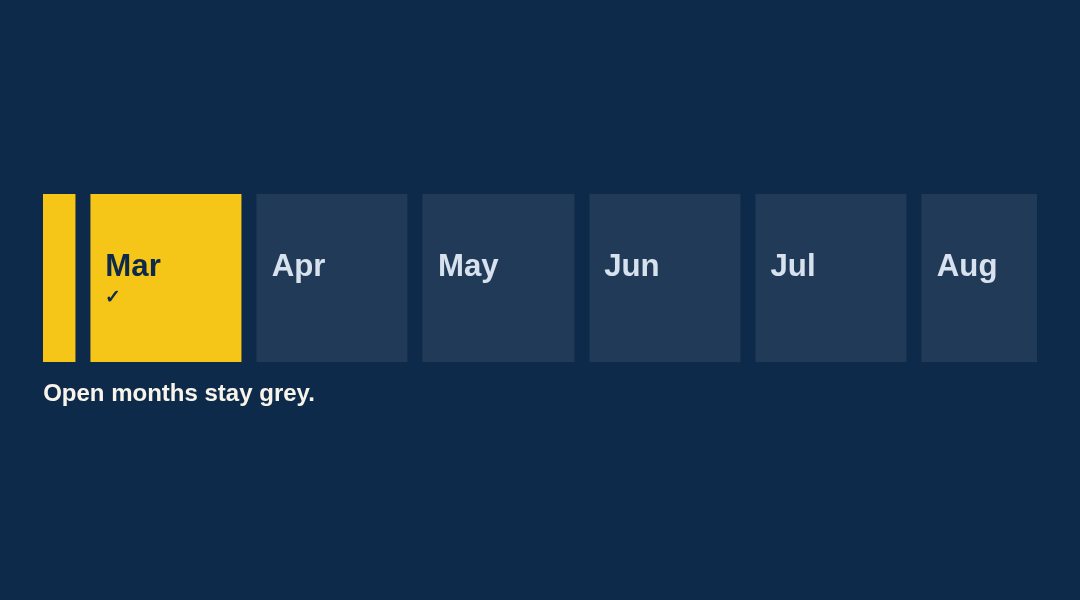
The months we close
Tap a month.
1January
The year just ended and three months were never closed.
We start that catch-up from one deposit and the legal name printed on it.
2April
The county wants a list of what sits on your shelves and in your trucks.
We prepare those figures from months already closed, and you sign the report.
3May
The franchise report is due and it wants the legal name, not the one on the glass.
Those franchise figures come from months we already tied to the bank, the same months the federal return will use.
4July
July still leaves room to choose owner pay and a large purchase before either one is only a record.
July is early enough to walk those tied months with you before a purchase is only history.
5September
A sales deposit in the city still has to show the state share, the city share, and DART.
You file the sales tax. We keep that three-way split inside the books.
6November
November is the last stretch when owner pay, a purchase, or the timing of a deposit can still change this year.
We name what is still open, and the return follows those closed months.
Meet Steven Palmieri, the Tax CFO for this practice in Dallas.
We have closed books for shops on Lower Greenville and warehouses off Stemmons. The mess looks the same everywhere, and so does a clean month.
The month has to close
Tell us where the books stand
Say which month last closed.
You will be talking to the Steven Palmieri practice.

The name on the deposit
Open this section
The name on the door and the name on the bank deposit are often different. We keep the books in the name the money posts to, so the return starts there too. A choice made while the year is still open can still change the year.
A short name on the glass can still be the name customers say. The books follow the longer name when that is the name the bank posts. We write both names on the first note so the close does not start in the wrong file.
If the last three months were never tied to the bank, we start with the oldest open month. Each deposit gets a line. Each withdrawal gets a line. What still does not match is written down before anyone talks about the return.
Payroll setup waits until that name is settled. A provider opened under the short name will not agree with a bank account opened under the long name. We connect the provider to the company that actually pays, then we record the setup in that same company.
Only months whose bank total already matches the books go on the return we prepare. A month the bank has not matched is left off that filing. A choice that can still change the year is named while the months are open, and it is written in the company the deposit uses.
Bring the statement you already have, even if the month on it was never closed. We can start from that page. You do not need a clean file before the first call, and you do not need to sort the receipts first.
On a receipt in Dallas the county column is zero, with the local point assigned to DART. We write that zero county line into the same close, so the books and the deposit tell one story.
Payroll on the paying company
Open this section
You keep the payroll login. We record the setup on the company that writes the checks, and that company can be longer than the name painted on the glass.
If two companies share a shop, only the one that pays should carry the payroll setup. We write that down before the first pay date, so the provider and the books name the same company.
What the first month includes
Open this section
The first month is a close, a talk, and a note of what is still open. We tie the month to the bank and code each amount under the deposit name.
A messy set of months is enough to start that talk. Waiting until the file looks finished only delays the close.
What the price depends on
Open this section
What we charge follows three facts from your shop. Open months are one fact. Bank accounts are another. A payroll setup that is still waiting is the third. After those facts are in front of us, we write a fee for that close. This page carries no sample number.
The first conversation carries no fee. Money on this close changes hands only after both sides have signed a written scope and a written fee.
What is not signed
Open this section
A lender report that needs a signed audit, or a signed review, or a signed compilation, is signed by a firm allowed to sign it. On the first call about the deposit name we name that limit and send only that report outward.
The close in the deposit name, payroll setup on the paying company, statements from months already tied to the bank, and the return from that close all stay here. The longer writing of that limit lives on the disclosures page for this bookkeeping close.
What a close looks like
Open this section
We start from the bank. Every deposit and every withdrawal in the month gets a line under the name the account uses. What is still open is written down, not folded into a total.
Then the statements are read from that month. Cash, what you owe, and what customers owe you are the lines we walk through. A choice that can still change the year is named while the months are open.
When you want payroll, we record the setup on the provider you already operate, as its own step after the bank tie. The return is prepared only once the bank total and the book total for that month are the same story. That order is the work.